Table of Contents
- Planning Your CrossFit Home Gym
- Must-Have CrossFit Home Gym Equipment
- Essential RitFit Equipment for a CrossFit Home Gym
- Highly Recommended Next-Tier CrossFit Equipment
- Nice-to-Have Add-Ons
- How to Prioritize Your Purchases
- Safety, Maintenance, and Setup Tips
- Budget-Saving Strategies
- Sample CrossFit Home Gym Setups
Important disclaimer: This article is for general educational purposes only and is not medical advice. If you have shoulder, neck, back, elbow, or wrist pain, a recent injury or surgery, numbness or tingling, unexplained weakness, or dizziness, consult a qualified clinician before starting. Stop any exercise that causes sharp pain.
Over the last decade, CrossFit has fundamentally changed how we view functional fitness. What started in gritty industrial warehouses has increasingly moved into garages, basements, and spare rooms. The rise of the home gym has empowered athletes to take control of their training schedules, eliminating commutes and class waitlists.
However, building a functional space requires more than just buying random weights. Having the right CrossFit equipment is critical for performance, safety, and versatility. You need gear that can withstand high-repetition dropping, support heavy powerlifting, and enable high-velocity gymnastics movements. This guide covers the essential gear you need to start, the nice-to-have items for expanding, and practical advice on budgeting and setup to help you build the ultimate training sanctuary.
Planning Your CrossFit Home Gym
Assess Your Space
Before buying a single piece of iron, look at your available footprint. Garages are the most popular choice due to concrete floors, but basements and outdoor patios can work too. The most critical factor often overlooked is ceiling height. For overhead presses, wall balls, and muscle-ups, you typically need a ceiling height of at least 8 to 9 feet. Measure the highest reach of your lifts and add a buffer for safety.
Set a Realistic Budget
Home gyms are an investment that pays off over time, but the upfront cost can be steep. Prioritize the "must-have" items listed below before splurging on specialty machines. It is often better to buy high-quality essential items in phases rather than buying a complete gym full of cheap gear that will break within a year.
Define Your Training Goals
Are you training for general fitness, or are you a competitive CrossFit athlete? A competitor might need a specific cardio machine (like a concept2 rower) and competition-spec plates, while a general fitness enthusiast can get great results with a basic barbell and a kettlebell. Tailor your purchase list to the programming you follow.
Must-Have CrossFit Home Gym Equipment (Core Essentials)
This is the foundation. With these items, you can perform 90% of standard CrossFit "Workouts of the Day" (WODs).
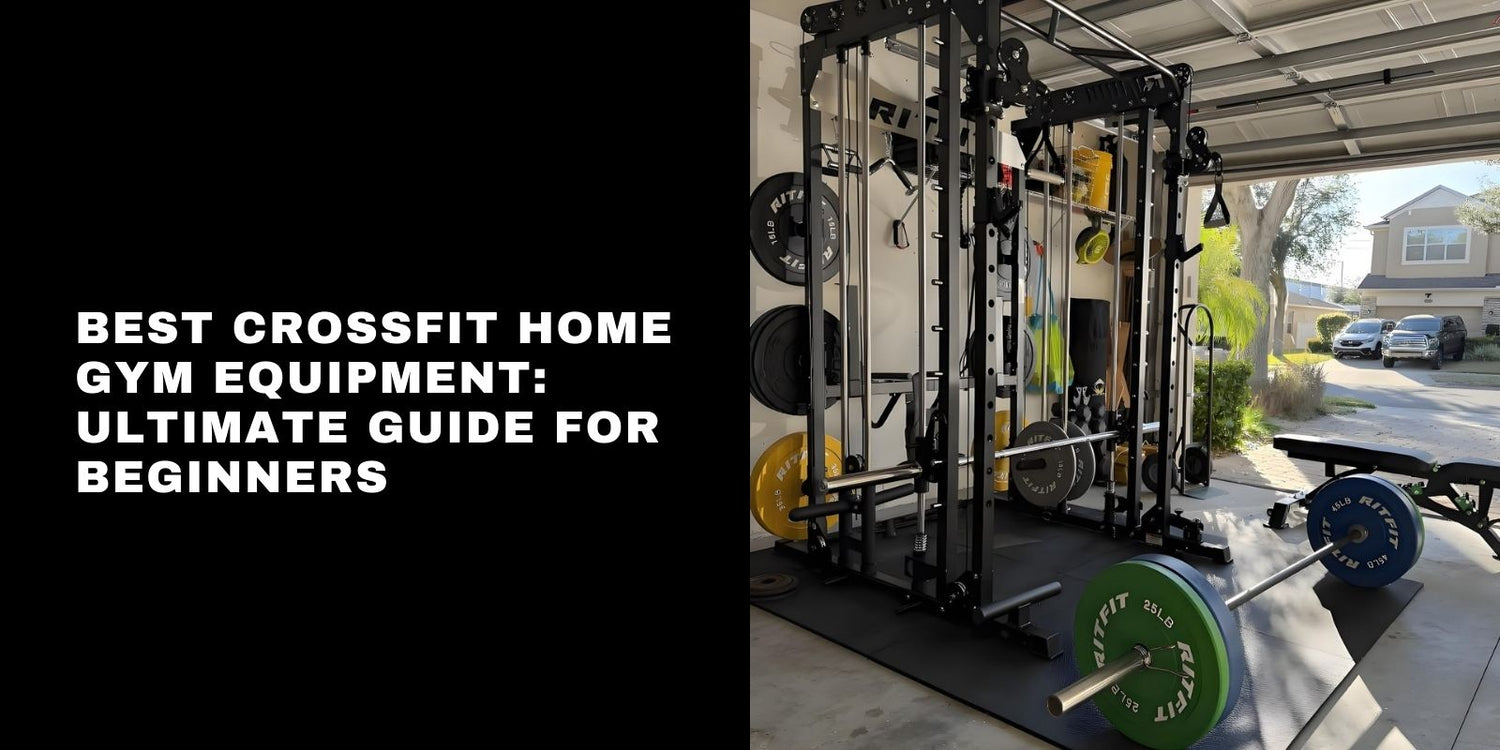
Olympic Barbell
The barbell is the centerpiece of any functional gym. It allows for Olympic lifts (snatch, clean and jerk) and power lifts (squat, deadlift). Look for a bar with decent "whip" (spin) and durable bushings or bearings. Men typically use a 20kg bar (28mm-29mm shaft), while women typically use a 15kg bar (25mm shaft). Do not buy a cheap "standard" 1-inch bar; ensure it is an Olympic 2-inch sleeve barbell.
Bumper Plates
Unlike commercial gym plates, CrossFit equipment must be designed to be dropped. Bumper plates are made of solid rubber, allowing you to safely drop the bar from overhead or the hip without destroying your floor or the weights. For a starter set, aim for a mix of weights (e.g., pairs of 45s, 25s, 10s in lbs or 20s, 10s, 5s in kgs).
Smith Machine / Power Rack
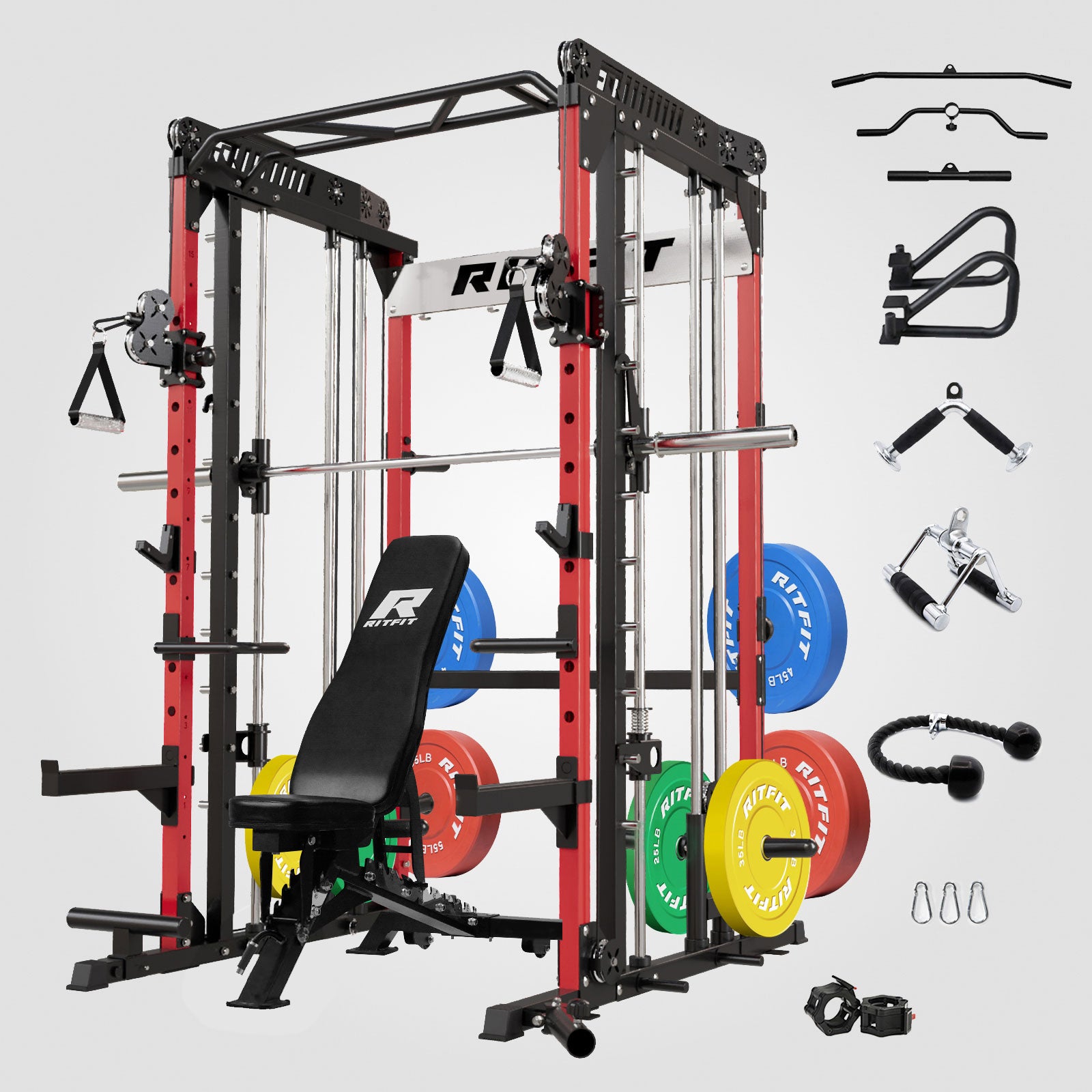
A sturdy rack is non-negotiable for heavy back squats and bench presses. Look for a rack with J-cups and safety spotter arms, especially if you train alone. If space is tight, consider a folding wall-mounted rack that collapses against the wall when not in use. Many Smith Machines/racks also come with a built-in pull-up bar, killing two birds with one stone.
Adjustable Bench
While you can do a lot on the floor, a bench opens up bench presses, scaling options for gymnastics, and accessory work like rows. A flat bench is sufficient for most, but an adjustable incline/decline bench adds variety for chest and shoulder development.
Pull-Up Bar / Rig
Gymnastics are a pillar of CrossFit. You need a bar stable enough for kipping and butterfly pull-ups. Wall-mounted or ceiling-mounted bars are generally more stable than doorway options. Ensure the finish (powder coat) provides a good grip for holding onto during high-rep sets of toes-to-bar.
Kettlebells
Kettlebells are incredibly versatile tools for conditioning and strength. They are used for swings, snatches, thrusters, and carries. A good starting point is one or two kettlebells: 16kg (35lb) and 24kg (53lb) for men, and 12kg (26lb) and 16kg (35lb) for women.
Dumbbells
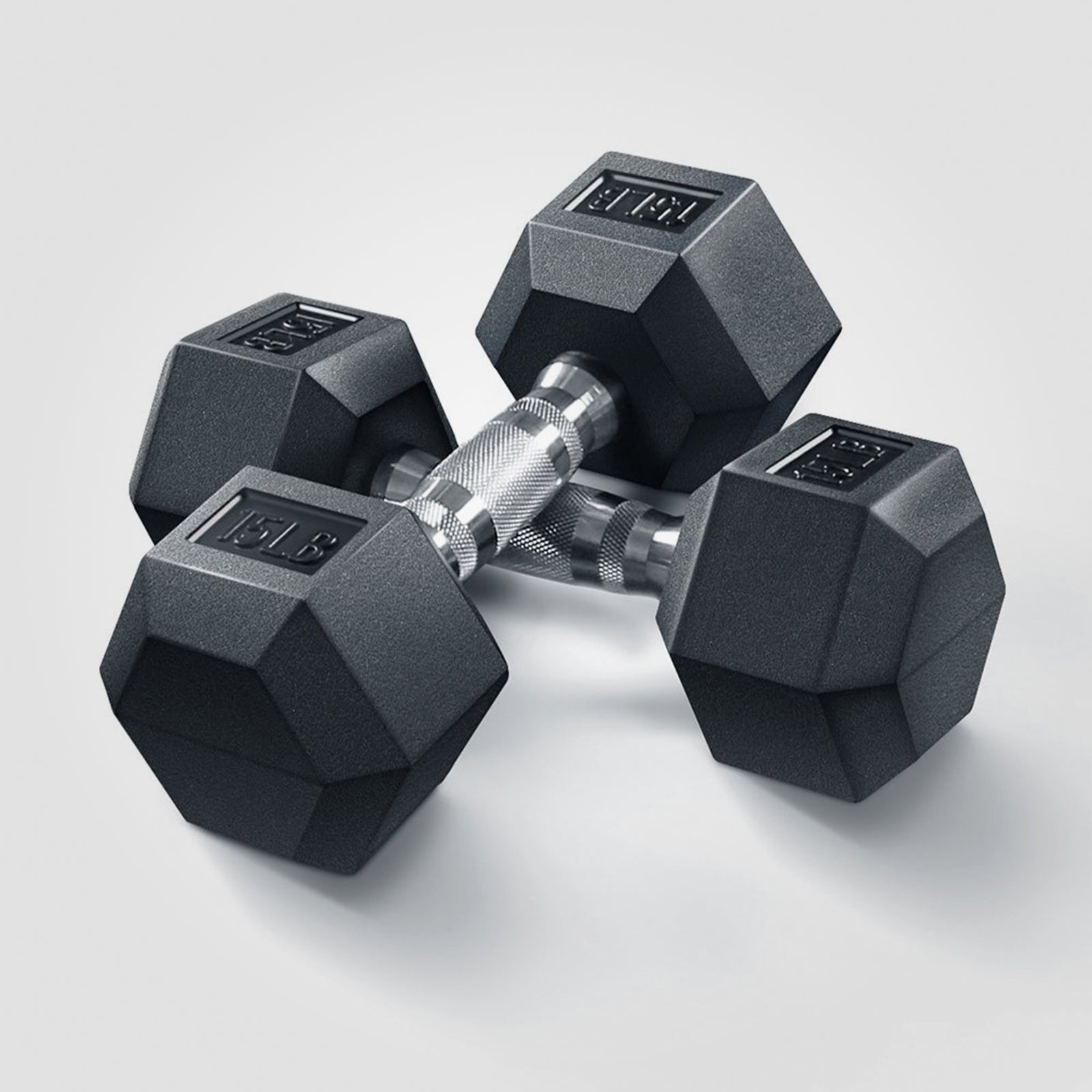
Since the CrossFit Open began including more dumbbell work, they have become essential. Hex-head rubber dumbbells are durable and won't roll away during burpees. If budget allows, get pairs of 35lb and 50lb dumbbells (for men) or 20lb and 35lb (for women).
Jump Rope
The jump rope is the ultimate portable conditioning tool. For double-unders, a speed rope with a wire cable and ball-bearing handles is preferred over the thick PVC ropes used in boxing. Sizing is key; ensure the cable length can be adjusted to your height.
Plyometric Box
Used for box jumps and step-ups, a plyo box is a staple. The standard "3-in-1" wood box is popular because you can flip it to use 20-inch, 24-inch, or 30-inch heights. Soft-shell plyo boxes are also a great option to save your shins from missed jumps.
Flooring / Mats
Protect your home and your joints. Horse stall mats (usually 4ft x 6ft and 3/4 inch thick) are the gold standard for garage gyms. They are durable, shock-absorbent, and much cheaper than specialized "gym flooring" tiles.
Essential RitFit Equipment for a CrossFit Home Gym
| CrossFit Equipment Need | Recommended RitFit Product | Model | Best For | Key Use in a CrossFit Home Gym |
|---|---|---|---|---|
| Olympic Barbell | RitFit 7FT Olympic Barbell Bar 2'' | N/A | Foundational barbell training | Supports cleans, deadlifts, front squats, presses, and other barbell-based WOD movements. |
| Bumper Plates | RitFit High-Grade Color Bumper Plates Olympic 2-Inch Rubber | N/A | Droppable training loads | Safer for Olympic lifts, barbell cycling, and protecting the floor during high-impact training. |
| Folding Squat Rack | RitFit Multi-Functional Folding Squat Rack | PWM02 | Small-space home gyms | Good for squats, benching, pull-ups, and space-saving garage or basement setups. |
| Power Cage | RitFit Power Cage with Adjustable Cable System | PPC03 | Strength-focused training | Better for heavy squats, bench presses, pull-ups, and safer solo lifting with built-in safety features. |
| Multi-Functional Smith Machine | RitFit Multi-Functional Smith Machine with Cable Crossover System | M1 or M1 PRO | All-in-one training setups | Combines guided bar work, cable training, and rack-style versatility in one footprint. |
| Foldable Adjustable Bench | RitFit Adjustable Foldable Weight Bench | PWB01 | Budget or compact setups | A more compact bench option for pressing, rows, and general accessory work. |
| Pull-Up Station | Built-in Pull-Up Bar on Rack or Cage | PWM02 / PPC03 / M1 | Gymnastics basics | Covers pull-ups, chin-ups, toes-to-bar, and other upper-body bodyweight work if your setup is securely installed. |
| Dumbbells | RitFit Rubber Hex Dumbbells Set with Rack | N/A | High-rep dumbbell WODs | Great for dumbbell snatches, lunges, thrusters, carries, and floor-friendly training. |
| Dumbbell Storage | RitFit 3-Tier Dumbbell Rack | N/A | Space organization | Keeps dumbbells off the floor and improves safety and training flow. |
| Soft Plyo Box | RitFit 3-in-1 Plyo Box Soft Foam Box Jump Platform | N/A | Box jumps and step-ups | Better for box jumps, step-ups, and reducing shin impact risk during missed reps. |
Highly Recommended (Next-Tier) CrossFit Equipment
Once you have the core items, look to add these to round out your conditioning and gymnastics capabilities.
Gymnastic Rings
Rings offer a level of instability that bars cannot match. They are essential for ring dips, rows, and the elusive muscle-up. Wood rings generally offer better grip than plastic ones.
Wall Ball / Medicine Ball
The wall ball shot is a classic metabolic conditioning movement. A standard soft medicine ball (20lb for men, 14lb for women) is all you need to replicate this stimulus at home.
Resistance Bands
Bands are cheap and take up zero space. Use them for mobility work, warm-ups, or scaling pull-ups as you build strength.
Rowing Machine (Rower)
If you have the budget for one piece of cardio equipment, make it a rower. It is low impact, builds pulling strength, and is featured constantly in CrossFit programming.
Air Bike
Often called the "Devil's Tricycle," the air bike provides a brutal full-body workout. It is excellent for high-intensity interval training, though it is often louder and takes up more space than a rower.
Nice-to-Have Add-Ons (Optional but Useful)
These items are luxuries that can add variety but aren't strictly necessary for a killer workout.
- GHD (Glute Ham Developer): Excellent for core and posterior chain strength, but takes up a lot of floor space.
- Sled / Prowler: Great for outdoor conditioning, provided you have a driveway or turf strip.
- Sandbags: Perfect for "odd object" training and building stabilizing strength.
- Climbing Rope: Essential for rope climbs, but requires high ceilings (12ft+) and secure mounting.
- Mobility Tools: Foam rollers and lacrosse balls are vital for recovery and keeping tissues healthy.
How to Prioritize Your Purchases
Don't feel pressured to buy everything at once. Start with a Minimalist Setup: Barbell, plates, collars, and a jump rope. You can do deadlifts, cleans, and floor presses. Next, move to an Intermediate Setup by adding a squat rack, pull-up bar, and box. Finally, build the Advanced Setup by adding cardio machines and specialty gymnastics gear.
Safety, Maintenance, and Setup Tips
Safety Considerations
Training alone at home means you are your own spotter. Always use safety arms when benching or squatting heavy. Keep your workout area clear of tripping hazards like loose plates or kettlebells.
Equipment Maintenance
Wire brush your barbell to remove chalk and dead skin, and oil the bearings occasionally to keep the spin smooth. Tighten the bolts on your rack and pull-up rig every few months to prevent wobbling.
Organizing Your Space
Invest in storage solutions like a plate tree or wall-mounted barbell gun rack. Getting gear off the floor maximizes your training square footage and keeps the gym looking professional.
Budget-Saving Strategies
To save money on CrossFit equipment, check local marketplaces for used weights, iron doesn't expire. However, be wary of used barbells that might be bent. Buying "packages" or bundles during major sales (like Black Friday) can also save significantly on shipping costs.
Sample CrossFit Home Gym Setups
- The Apartment Gym: Kettlebell, Dumbbells, Jump Rope, Resistance Bands. (Stows away in a closet).
- The Budget Garage Gym: Stall mats, Squat Stand (independent stands), Barbell, Bumper Plates, Wooden Box.
- The Competitor's Lab: Power Rack, Full set of Competition Plates, Rower, Air Bike, Rings, Dumbbell set, and wall timer.
FAQs
What is the minimum ceiling height required for a functional CrossFit home gym?
You typically need a ceiling height of at least eight to nine feet. This clearance allows you to perform overhead presses, wall balls, and muscle-ups safely. You must measure the highest reach of your lifts and add a buffer for safety to avoid damaging your ceiling during intense workouts.
How can I protect the floor of my new CrossFit home gym from heavy dropped weights?
Horse stall mats are the absolute best choice for protecting your floors and joints. These thick rubber mats are highly durable and absorb the shock of dropping heavy bumper plates. They are significantly cheaper than specialized gym flooring tiles and easily cover garage or basement concrete surfaces perfectly and safely.
Where should I start if I want a CrossFit home gym but only have a small apartment?
You should start with a minimalist setup containing a heavy kettlebell, a pair of rubber hex dumbbells, a jump rope, and resistance bands. These compact tools easily stow away in a closet corner. This combination allows you to perform effective conditioning and strength workouts without taking up valuable floor space.
Why do I need solid rubber bumper plates for my essential CrossFit home gym equipment?
Bumper plates are entirely necessary because they are designed to be dropped safely from overhead positions. Standard iron commercial gym plates will easily destroy your concrete floor and the barbell. Solid rubber plates protect your property and allow you to safely perform heavy powerlifting and dynamic Olympic lifting movements daily.
What pieces of equipment should I prioritize first when building a CrossFit home gym on a budget?
You should prioritize purchasing a quality Olympic barbell with bumper plates and a jump rope first. These core essentials allow you to perform most daily workouts immediately. You can gradually add a sturdy squat rack and a pull-up bar later when your budget allows for further gym expansion projects.
Conclusion
Building a home gym is a journey, not a sprint. By focusing on the must-have CrossFit equipment first, specifically a good barbell, bumpers, and a place to do pull-ups, you can replicate the intensity and effectiveness of a box workout from the comfort of your home. Start small, train consistently, and add pieces as your fitness grows.