









Table of Contents
Ab warm up exercises with a bench help you wake up your core before lifting, so your torso feels more stable during presses, rows, squats, and lunges. This bench based routine uses simple drills to improve bracing, breathing, and body control in about five minutes.
Key Takeaways
- A short bench core warm up can improve bracing: It helps many lifters feel more organized before heavier work.
- Keep the effort controlled: This routine is for activation, not for turning your warm up into a hard ab workout.
- Bench based drills are beginner friendly: They are easy to scale when neck strain, lower back tension, or weak core control are issues.
- Range of motion matters more than speed: Smaller, cleaner reps usually work better than fast reps that shift stress into the neck or hips.
- One round is enough for most sessions: Add a second round only if you still feel stiff or disconnected before lifting.
Why are ab warm up exercises so necessary?
A short ab warm up helps you find your brace before heavier training, which can improve body awareness and trunk control during compound lifts. For most readers, the real goal is not fatigue, it is feeling stable sooner and moving better once the main workout starts.
Dynamic abdominal work can recruit the rectus abdominis and external obliques, which supports using controlled crunch and rotation patterns early in a session.[1]
How to use this ab warm up routine
Use this routine after a light general warm up and before your main lift, whether that is a dumbbell session, a barbell workout, or work on one of our Smith machines. If you train on an adjustable weight bench, set the pad flat and make sure it feels planted before you start.
Most people only need one round, with 20 to 30 seconds or 8 to 12 slow reps per move. If you are building a home setup, a stable bench from our weight benches collection gives you enough support for warm ups and enough versatility for the rest of the session.
Safety notes before you start
Move slowly and stop well before form breaks down, because a warm up should improve control, not create sloppy fatigue. If you feel sharp pain, numbness, dizziness, or symptoms that increase from rep to rep, stop the movement and switch to an easier option.
Pelvic control matters because trunk and hip muscles work together to manage posture, so keep your ribs down, breathe steadily, and avoid throwing your legs around to create momentum.[4]
Best 5 Ab Warm Up Exercises with Bench
Ab Warm Up 1. Elevated Bicycle Crunch

The elevated bicycle crunch is a strong first choice when you want rotation plus anterior core tension before bigger lifts. It fits well in a warm up because it trains controlled trunk flexion and rotation without needing extra load.[1]
- How to do it: Lie face up on the bench and place your hands lightly by your ears. Bring one knee toward your chest as you rotate the opposite shoulder forward, then switch sides with control.
- Muscles worked: Rectus abdominis, external obliques, anterior core.
- Pro tips: Keep your chin slightly tucked and think about moving your rib cage, not yanking your neck. If your lower back arches, raise the legs a little higher or bend the knees more.
- Make it easier: Shorten the twist and keep both knees more bent. You can also touch one heel to the bench between reps.
- Make it harder: Slow each side down and pause briefly at the top of the twist. Keep the ribs down as you switch sides.
Ab Warm Up 2. Fifer Scissor

The fifer scissor, also called bench scissor kicks, helps you practice lower ab control while your legs move under light tension. It works best when the motion stays small and your lower back stays quiet against the pad.
- How to do it: Lie flat on your back with both legs long and your arms by your sides. Lift one leg toward vertical while the other leg stays just above the bench, then switch in a smooth scissor rhythm.
- Muscles worked: Lower abs, hip flexors, deep trunk stabilizers.
- Pro tips: Think about pressing the low back gently into the bench before every switch. The smaller the lever, the easier it is to keep the abs leading the movement.
- Make it easier: Keep both knees slightly bent and place your hands under your hips for light support. Raise the lower leg higher if your back wants to arch.
- Make it harder: Slow the exchange and pause each time one leg reaches the top. Keep tension in the front of the core the whole time.
Ab Warm Up 3. Knee In

The knee in is a practical bridge between static bracing and moving your legs under control. Combining abdominal core activation with lower body movement can improve hip muscle recruitment, which is one reason this drill fits well before full body lifting.[3]
- How to do it: Sit near the front edge of the bench, lean back slightly, and lift your feet. Extend the legs away a little, then pull the knees in as your torso comes back toward upright.
- Muscles worked: Lower abs, hip flexors, trunk stabilizers.
- Pro tips: Keep the chest open and think about bringing ribs and pelvis closer together. Use the bench lightly for balance, not as a way to yank yourself through the rep.
- Make it easier: Let the toes tap the bench between reps and reduce the lean back. Short, clean reps work better than long swinging reps.
- Make it harder: Use less hand support and slow the extension phase. Keep the lower back from collapsing as the legs move away.
Ab Warm Up 4. Reverse Crunch

The reverse crunch teaches you to roll the pelvis instead of swinging the legs, which makes it a better warm up than a momentum based leg toss. It is especially useful when you want lower ab tension without loading the neck.
- How to do it: Lie face up, bend the knees to about 90 degrees, and hold the bench lightly for support. Curl the hips off the bench a small amount, then lower slowly without throwing the legs.
- Muscles worked: Lower abs, anterior core, hip flexors.
- Pro tips: Keep the range short and think about rolling the pelvis toward your ribs. If you swing the thighs, the drill turns into momentum instead of activation.
- Make it easier: Start with the knees closer to your chest and reduce how high the hips lift. Stay smooth from start to finish.
- Make it harder: Lower more slowly and pause at the top of the curl. Keep the ribs down so the movement stays in the front of the trunk.
Ab Warm Up 5. Side Plank
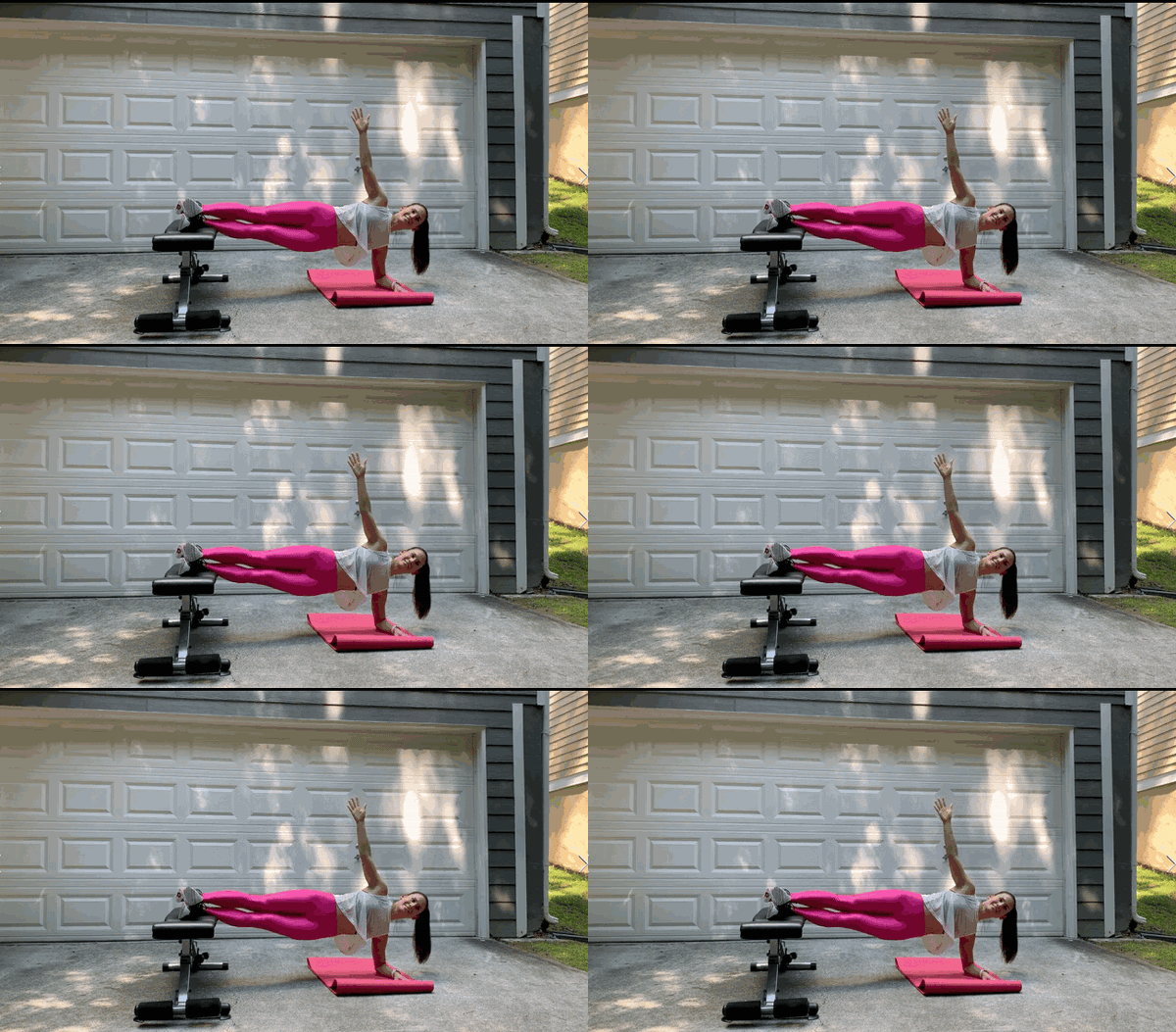
The side plank adds lateral core work that many lifters skip, even though it helps train the trunk to resist side to side collapse. Side bridge research shows strong recruitment of trunk and hip muscles on the weight bearing side, which supports using this drill before loaded training.[2]
- How to do it: Place your forearm on the floor with the elbow under the shoulder and set your feet so you can balance safely. Lift the hips and hold a straight line from head to heels while breathing steadily.
- Muscles worked: Obliques, quadratus lumborum, gluteus medius, trunk stabilizers.
- Pro tips: Stack the rib cage over the pelvis and do not let the bottom waist collapse. A shorter hold with perfect alignment is better than a long hold with sagging hips.
- Make it easier: Bend the knees and shorten the hold. You can also stagger the feet instead of stacking them.
- Make it harder: Extend the top arm upward or lift the top leg slightly. Keep the torso quiet while the challenge increases.
Sample ab warm up routine with the bench
Use this simple plan as a quick guide before your workout. It pairs well with sessions built around dumbbells, benches, or a full body home gym day.
| Exercise | Time or Reps | Coaching notes |
|---|---|---|
| Elevated Bicycle Crunch | 20 to 30 seconds | Rotate from the rib cage, not the neck. |
| Fifer Scissor | 20 to 30 seconds | Keep the lower back quiet and the range small. |
| Knee In | 8 to 12 reps | Control the lean back and the return. |
| Reverse Crunch | 8 to 12 reps | Roll the pelvis, do not swing the thighs. |
| Side Plank | 15 to 25 seconds per side | Stack ribs over pelvis and keep hips lifted. |
Start with one round of this routine and rest only long enough to reset clean form. Add a second round only when you can keep the same control from the first move to the last.
FAQs
How long should an ab warm up with a bench take?
Most lifters only need about five minutes. One controlled round is enough to wake up the abs, obliques, and trunk stabilizers before heavier work, and a second round is optional if you still feel stiff or disconnected.
Can ab warm up exercises with a bench help reduce lower back compensation?
Yes. A short bench core warm up can help you find a better brace before pressing, rowing, or squatting. It will not fix every cause of lower back pain, but it can reduce compensation if you keep your ribs down, move slowly, and stop before fatigue changes your form.
Are bench ab warm up exercises good for beginners?
Yes. Bench based core drills are beginner friendly because the setup is simple, the range of motion is easy to control, and you can scale each move quickly. Start with shorter holds, fewer reps, and supported positions before trying longer sets or harder progressions.
What should I do if I feel bench ab warm up exercises in my hip flexors?
If the hip flexors take over, reduce the leg lever, bend the knees more, and focus on a slight pelvic tuck before each rep. You should feel the front of the core brace first, then keep the movement small enough that your lower back stays quiet.
Should I do ab warm up exercises with a bench before upper body days?
Yes. Upper body sessions still depend on trunk stiffness, breathing control, and rib position, especially for bench presses, rows, and overhead work. A short ab warm up can help you feel more stable on the bench and keep your torso organized during pressing.
Can I do this ab warm up routine every workout day?
Yes, if the volume stays low and the effort stays controlled. Treat this as activation, not as a hard ab workout, and rotate easier drills when your abs, neck, or hip flexors still feel tired from the previous session.
Conclusion
A short bench based ab warm up can help you feel your brace sooner and move with better control once the real workout starts. Keep the routine simple, keep the reps clean, and treat it as preparation, not punishment.
Disclaimer: This article is for general education and fitness guidance. Stop any movement that causes sharp pain, numbness, dizziness, or symptoms that get worse during training, and speak with a qualified clinician or coach if you have a recent injury, surgery, hernia, or persistent neck or lower back pain.
References
- Mandroukas A Michailidis Y Kyranoudis AE Christoulas K Metaxas T. Surface electromyographic activity of the rectus abdominis and external oblique during isometric and dynamic exercises. J Funct Morphol Kinesiol. 2022;7(3):67. doi:10.3390/jfmk7030067
- Youdas JW Boor MMP Darfler AL Koenig MK Mills KM Hollman JH. Surface electromyographic analysis of core trunk and hip muscles during selected rehabilitation exercises in the side bridge to neutral spine position. Sports Health. 2014;6(5):416-421. doi:10.1177/1941738114539266
- Chan MKY Chow KW Lai AYS Mak NKC Sze JCH Tsang SMH. The effects of therapeutic hip exercise with abdominal core activation on recruitment of the hip muscles. BMC Musculoskelet Disord. 2017;18:313. doi:10.1186/s12891-017-1674-2
- Ludwig O Dindorf C Kelm S Kelm J Fröhlich M. Muscular strategies for correcting the pelvic position to improve posture. J Funct Morphol Kinesiol. 2024;9(1):25. doi:10.3390/jfmk9010025





