








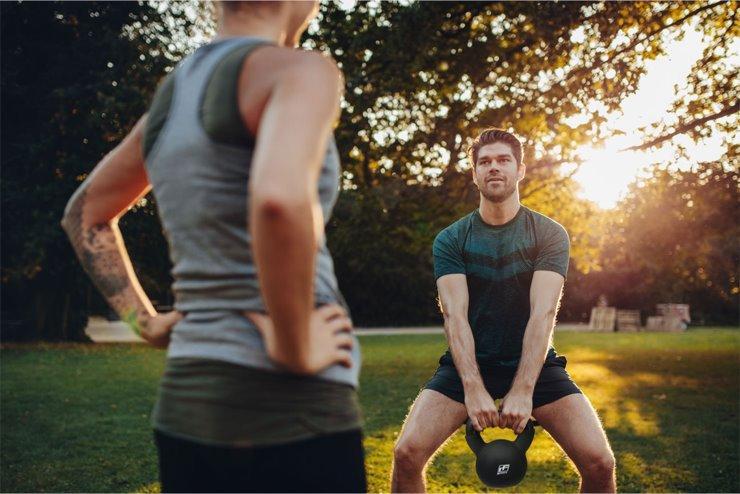
A kettlebell is one of the most affordable and effective pieces of home workout equipment you can buy. For less than $20, a single cast iron kettlebell removes the excuses about time, space, money, and results that keep people from exercising.
This guide explains how a kettlebell changes your approach to fitness, how much space and money you need, and how to choose your first kettlebell. It is written for beginners who want a simple, effective full body workout at home.
Quick Answer: A kettlebell is a cast iron ball with a handle that delivers a full body, multi joint workout in 20-30 minutes. It builds strength, trains your heart and lungs, needs only about four square feet of space, and costs less than $20. That makes it a practical first piece of home workout equipment for beginners.
Key Takeaways
- Time: Kettlebell training is extremely efficient, and a full body, multi joint program takes as little as 20-30 minutes.
- Space: You only need about four square feet of clear floor space to swing a kettlebell in your home.
- Cost: A first kettlebell costs around $20 and lasts a lifetime.
- Results: Kettlebell swings provide both resistance training and cardio, helping you build strength and burn calories.
- Gym free: You do not need a gym membership to benefit from kettlebell training.
How efficient is a kettlebell workout?
Kettlebell training is extremely efficient because one swing works virtually every muscle group between your neck and ankles, plus your heart and lungs. You can complete a full body, multi joint program in as little as 20-30 minutes, three or four times a week.
- Full body: Few exercise options provide both resistance training and cardio in one movement.
- Multi joint: The kettlebell swing trains your muscles, your heart, and your lungs together.
- Sustainable: Finding 20-30 minutes three or four times a week is realistic for most schedules.
For a structured way to use that time, follow the Ultimate Beginner Kettlebell Workout Guide.

"Once or twice a week of an effective routine can be sufficient to maintain muscle mass"
Eric Helms, PhD, Natural Pro Bodybuilder, Researcher and Coach, Next Step Nutrition
How much space do you need for a kettlebell?
You only need about four square feet of clear floor space, with six square feet ideal, to swing a kettlebell safely. Slide a chair out of the way in your living room, or use the space beside or at the end of your bed.
- Storage: A first kettlebell takes up less floor space than a pair of shoes.
- Locations: Use your living room, bedroom, garage, porch, or patio.
- Setup tips: The Home Gym Guide and Home Gym Ideas show how to fit training into small spaces.
How much does a first kettlebell cost?
A first kettlebell costs about $20 and lasts a lifetime, which makes it one of the most affordable home workout equipment options. As you get stronger, you add heavier kettlebells, but most people need only three to five of varying weight.
- Value: Your first kettlebell is a one time purchase that you use for years.
- Progression: Buy heavier bells only as you become more fit and stronger.
- Compare options: See Best Affordable Home Gym Equipment For Home Workouts for other budget friendly choices.
Does kettlebell training build strength and burn fat?
Yes. Kettlebell training is effective because it builds strength[1] and provides an awesome cardio workout that burns calories and fat[2]. It works your body as one whole unit instead of focusing on a single muscle group.
- Strength: Resistance training with a load you can control builds strength across your whole body.
- Cardio: The swing raises your heart rate, so you condition your heart and lungs while you lift.
- Efficiency: Combining strength and cardio in one session gets more results from less time.
Trainers often recommend mixing kettlebell work with other movements. The Home Crossfit Workouts Guide and Full Body Workouts With Home Workout Bench add variety to a home routine.
Do you need a gym for kettlebell training?
No. You do not need the expense or the hassles of a gym to benefit from kettlebell training, even though gyms do have kettlebells. You only need a little instruction, which is readily available online, through DVDs, books, or magazines.
- Instruction: Learn the basic swing from a trusted source before adding weight.
- Convenience: Exercising in the comfort of your own home is a big factor in the popularity of kettlebell training[3].
- Gym free: Skip the commute and the monthly fee while still getting a full body workout.
For a complete home gym later, the M1 Multi Functional Home Gym Smith Machine pairs well once you want to add machines.
What should you look for when choosing your first kettlebell?
Choose a kettlebell that is cast iron without seams or welds, so it is durable and will last forever. Look for a flat bottom for easy storage and stability, a vinyl coating to protect your floors and reduce sound, and a guarantee for peace of mind.
- Cast iron: Solid cast iron without seams or welds holds up to years of use.
- Flat bottom: A flat base is easier to store and supports your weight during advanced exercises.
- Vinyl coating: The coating protects your floors, lowers noise, and color coded weights help you identify the load quickly.
- Guarantee: Choose a kettlebell that comes with a guarantee.
Find one that meets all of these requirements in the Kettlebell collection.

FAQs About Kettlebells
How often should a beginner do kettlebell training?
Beginners can train three or four times a week with 20-30 minute sessions.
Full body programs need recovery days between sessions.
This schedule is realistic for most people and still builds strength and cardio.
Start with lighter weight, and add days only when your form feels solid.
What weight kettlebell should a beginner start with?
Start with a weight you can swing with control for 10-15 reps.
Most new lifters begin around 8-12 kg for women and 12-16 kg for men.
A bell that is too heavy forces poor form.
You can add heavier kettlebells later as you get stronger.
Can you build muscle with a kettlebell?
Yes, kettlebell training builds strength and muscle because it provides resistance across a full range of motion.
Swings, squats, and presses load your muscles while your heart works harder.
Progressive overload, or slowly increasing weight and reps, keeps results coming.
Is a kettlebell swing good cardio?
Yes, the kettlebell swing conditions your heart and lungs while it trains your muscles.
A full body, multi joint movement like the swing raises your heart rate quickly.
This makes kettlebell training both a resistance workout and a cardio workout in one session.
Do you need much space for a kettlebell workout?
No, you only need about four square feet of clear floor space to swing a kettlebell safely.
A living room corner, a spot beside your bed, or a garage all work.
The bell itself stores in less floor space than a pair of shoes.
Are kettlebells safe for home training?
Kettlebells are safe for home training when you start light and learn proper form.
Begin with the basic two hand swing and keep your back neutral.
Clear the area around you before swinging, and use a flat bottom bell with a vinyl coating for stability and noise control.
Conclusion
A kettlebell changes your approach to fitness because it removes the biggest excuses for not working out.
It is efficient, needs almost no space, costs about $20, and delivers both strength and cardio in your own home.
That is why a simple kettlebell can change your life.
Start with one cast iron kettlebell you can swing with control, learn the basics from a trusted source, and train three or four times a week. Check the RitFit sales page when you are ready to buy.
Disclaimer
The information in this article is for general educational purposes and is not a substitute for professional medical or fitness advice. Always consult a qualified professional before starting a new exercise program, especially if you have an injury, a medical condition, or have not trained recently.
References
1. Lopez P, Radaelli R, Taaffe DR, et al. Resistance Training Load Effects on Muscle Hypertrophy and Strength Gain: Systematic Review and Network Meta-analysis. Med Sci Sports Exerc. 2021;53(6):1206-1216. doi:10.1249/MSS.0000000000002585. PMCID: PMC8126497
2. Tsuji K, Tsuchiya Y, Ueda H, Ochi E. Home-based high-intensity interval training improves cardiorespiratory fitness: a systematic review and meta-analysis. BMC Sports Sci Med Rehabil. 2023;15(1):166. PMCID: PMC10696712
3. Vitale JA, Bonato M, Borghi S, et al. Home-Based Resistance Training for Older Subjects during the COVID-19 Outbreak in Italy: Preliminary Results of a Six-Months RCT. Int J Environ Res Public Health. 2020;17(24). doi:10.3390/ijerph17249533. PMCID: PMC7767132





